

High-volume B2C companies don’t struggle with demand. They struggle with handling it consistently.
Thousands of daily interactions across calls, chat, WhatsApp, and email create operational pressure that manual teams cannot sustainably manage. Even well-staffed contact centers hit limits. Delays creep in. Customer experience becomes inconsistent. Costs rise faster than revenue.
Conversational AI changes this equation by introducing predictable scalability. Instead of adding agents linearly with volume, AI absorbs repetitive interactions instantly.
But the real value goes beyond automation. It standardizes responses, ensures no lead is missed, and keeps service quality consistent even during spikes. This is critical for industries like e-commerce, fintech, and home services, where response time directly impacts conversion.
For high-volume B2C, conversational AI is not a cost-saving tool. It is a revenue protection layer.
The biggest mistake teams make is assuming conversational AI works the same way across business models. It doesn’t.
In B2B, conversations are fewer but deeper. Sales cycles are longer. The focus is on qualifications, demos, and relationship-building. AI plays a supporting role, assisting agents rather than replacing interactions.
In B2C, the dynamics are completely different. Volume is high, intent is immediate, and decisions happen quickly. Customers expect instant responses. Here, conversational AI becomes the frontline system, not just an assistant.
B2C AI must handle:
- Lead capture and qualification in real time
- Order updates and transactional queries
- Appointment booking and rescheduling
- Escalation handling without friction
The key difference is this:
B2B AI optimizes conversations. B2C AI operates them at scale.
Understanding this distinction is critical when evaluating use cases. What works in B2B will not deliver the same ROI in B2C environments
Understand which AI approach fits your business model.
India’s D2C ecosystem brings unique challenges: high traffic spikes, multilingual audiences, and price-sensitive customers who expect instant responses.
Not every use case works equally well in this environment. The highest impact comes from use cases that directly influence conversion and retention.
The most valuable use cases for D2C brands include:
- Real-time lead capture and qualification
Website visitors drop off quickly. AI ensures every interaction is captured, qualified, and routed without delay. - Order tracking and post-purchase support
A large percentage of queries revolve around delivery status. Automating this reduces support load significantly. - Abandoned cart recovery conversations
Instead of generic reminders, AI can engage users conversationally, addressing objections and nudging conversions. - COD confirmation and fraud reduction
AI voicebots can verify orders instantly, reducing returns and operational losses. - Multilingual customer engagement
India’s diversity demands localized communication. AI enables scalable multilingual support without hiring region-specific teams.
These are not “nice-to-have” automations. They directly impact conversion rates, operational costs, and customer satisfaction.
Explore high-impact use cases tailored for Indian D2C growth with Convin.
This blog is just the start.
Unlock the power of Convin’s AI with a live demo.

See how omnichannel AI reduces support costs at scale
One of the biggest inefficiencies in customer service is fragmentation. Conversations happen across channels, but systems don’t talk to each other.
Customers repeat themselves. Agents switch tools. Context gets lost. This increases handling time and reduces satisfaction.
Omnichannel conversational AI solves this by creating a single conversation layer across channels. Whether a customer starts on chat and moves to a call, the context remains intact.
This reduces costs in three major ways:
- First, it lowers average handling time by eliminating repetition.
- Second, it reduces agent dependency by automating common queries across channels.
- Third, it improves first contact resolution, reducing repeat interactions.
The result is not just cost reduction. It is operational efficiency at scale, where every interaction becomes faster, smarter, and more consistent.
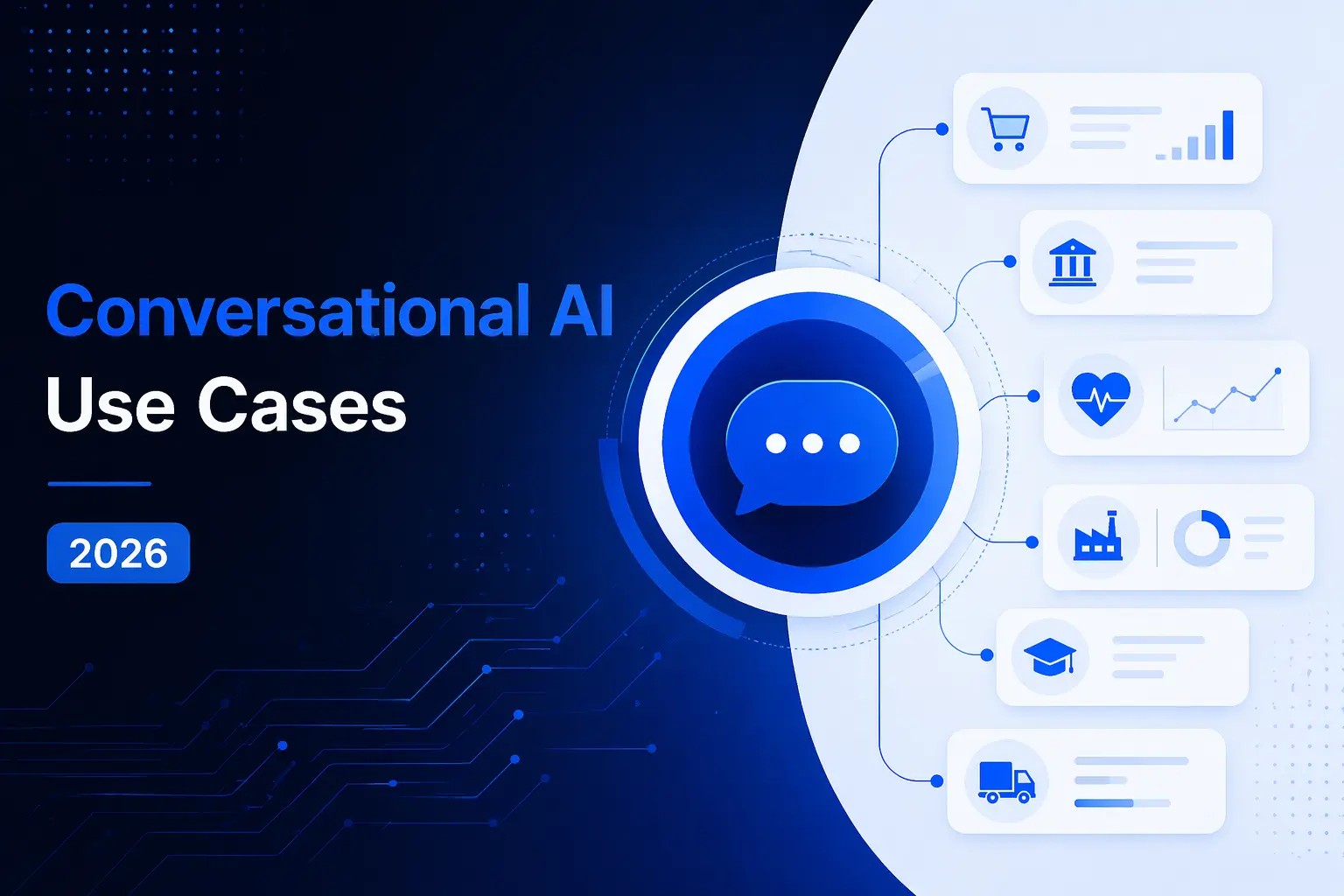
Conversational AI is already part of everyday business operations. It helps teams respond faster, reduce manual work, and create smoother experiences for customers and employees through simple voice or text interactions.
Here’s how it shows up across industries.
Retail and E-commerce
In online shopping, conversational AI helps customers find what they need quickly and complete actions without friction.
- Product recommendations based on browsing behavior
- Virtual shopping assistants for guided buying
- Instant order tracking updates
- Self-service returns and exchanges
- Real-time inventory checks
Financial Services and Banking
In finance, speed and accuracy matter. Conversational AI helps customers complete tasks securely without waiting.
- Account balance and transaction queries
- Fraud alerts and suspicious activity notifications
- Guided loan application journeys
- Password resets and identity verification
- Voice or chat-based trading assistance
Healthcare
Healthcare teams use conversational AI to improve access and reduce administrative load.
- Appointment booking and rescheduling
- Basic symptom checking before consultation
- Follow-ups for ongoing care
- Clinical note assistance for doctors
- Insurance and coverage queries
Real Estate and Property Management
It helps manage high inquiry volumes and keeps communication responsive.
- Handling leasing and property inquiries
- Scheduling maintenance requests
- Assisting with virtual property tours
Human Resources
For HR teams, it simplifies internal communication and support.
- New hire onboarding support
- Employee benefits and policy queries
- Internal FAQ automation
Customer Support and Marketing
This is where conversational AI delivers the most visible impact.
- Routing queries to the right team
- Assisting agents during live conversations
- Identifying customer sentiment
- Engaging visitors and qualifying leads
See how Convin drives measurable outcomes from your AI use cases
The difference between a successful deployment and a failed one often comes down to evaluation criteria.
- Look for volume alignment. A use case must have enough interaction volume to justify automation.
- Evaluate the impact on revenue or cost. If it doesn’t move a business metric, it shouldn’t be prioritized.
- Assess the complexity of execution. Some use cases look attractive but require heavy integration or customization.
- Check channel dependency. High-impact use cases often span multiple channels, not just one.
- Measure customer experience improvement. Faster responses alone are not enough. The interaction must feel seamless.
- Finally, ensure scalability. The use case should perform consistently even as volumes grow.
These criteria help shift the conversation from “what AI can do” to “what AI should do first.”
Most teams don’t fail because of bad technology. They fail because of poor prioritization.
One common mistake is focusing on low-impact use cases simply because they are easy to implement. This leads to quick wins but no real business impact.
Another mistake is over-automating complex conversations too early. Without proper training and fallback mechanisms, this can damage customer experience.
Many teams also ignore integration requirements. A use case that does not connect with CRM or backend systems creates more friction than value.
And finally, some buyers prioritize features over outcomes. They choose platforms based on capabilities instead of measurable results.
Avoiding these mistakes is often more important than choosing the “perfect” use case.
Apply this framework to shortlist your top AI use cases
To move from exploration to execution, you need a simple decision framework.
Start by listing all potential use cases across your business. Then evaluate each one on three dimensions: volume, impact, and complexity.
High-volume, high-impact, low-complexity use cases should always be prioritized first. These deliver quick ROI and build internal confidence.
Medium-complexity use cases can follow once the system stabilizes. High-complexity, low-impact ones should be avoided or delayed.
This framework ensures you focus on what actually drives results instead of getting lost in possibilities.
Once you evaluate use cases through the right lens, the next step is choosing a platform that can execute them reliably.
Convin is designed specifically for high-volume B2C environments where conversations directly impact revenue. It combines conversational AI with deep conversation intelligence, ensuring that interactions are not just automated but continuously improved.
Teams using Convin have seen measurable outcomes, including up to 27% improvement in CSAT and 60% faster onboarding of AI systems.
What makes the difference is not just automation, but the ability to analyze every interaction, identify gaps, and optimize performance at scale.
This ensures that the use cases you choose don’t just work initially, but keep improving over time.
At this stage, the goal is not to explore more possibilities. It is to commit to the right ones.
Conversational AI delivers value only when aligned with real business outcomes. The companies that succeed are not the ones using the most use cases, but the ones using the right use cases in the right order.
If you focus on volume, impact, and scalability, the path becomes clear. And once the foundation is strong, expanding across industries and use cases becomes a natural next step.
1. What is the typical timeline to implement conversational AI use cases?
Most conversational AI use cases can go live within 2–6 weeks, depending on complexity and integrations. Simple use cases like FAQs or lead capture are faster, while workflows involving CRM or backend systems take longer.
2. How do you measure ROI from conversational AI deployments?
ROI is measured through metrics like cost per interaction, conversion rates, first response time, and agent productivity. The most reliable indicator is improvement in revenue or reduction in support costs over time.
3. Can conversational AI handle industry-specific compliance requirements?
Yes, modern platforms can be configured to follow compliance rules such as data privacy, consent collection, and audit logging. This is especially important in industries like fintech, healthcare, and insurance.
4. What level of customization is required for conversational AI use cases?
It depends on the use case. Basic workflows require minimal customization, but high-impact use cases often need tailored conversation flows, integrations, and training data to perform effectively.
5. How does conversational AI improve agent productivity in contact centers?
Conversational AI handles repetitive queries, allowing agents to focus on complex issues. It also provides real-time suggestions, summaries, and insights, reducing handling time and improving overall efficiency.
.avif)



.avif)

.avif)