


A customer discovers your product through an Instagram ad while commuting to work. They click through to your website, browse a few products, and leave. Later that evening, they message your brand on WhatsApp with a question about sizing. The next day, they visit your store. The associate has no idea they came from Instagram, viewed three products online, or already asked about sizing. The customer repeats everything.
From the customer's perspective, it's one journey. From the brand's perspective, it's three disconnected interactions.
This disconnect is one of the biggest growth challenges facing modern retailers today. Customers move fluidly between digital and physical channels, but many businesses still operate them separately.
That is why omnichannel retail has become a strategic priority for both retailers and D2C brands. The goal is no longer to simply be present across channels. The goal is to connect every interaction into a single, continuous customer journey.
Increasingly, artificial intelligence is becoming the technology that makes this possible.
According to Salesforce's 2025 Connected Shoppers Report, 88% of retailers believe unified commerce will significantly impact their business goals, while 75% expect AI agents to become essential for competitiveness by 2026
See how brands connect customer journeys with Convin.
What Does Omnichannel Retail Mean When Customers Move Across Channels?
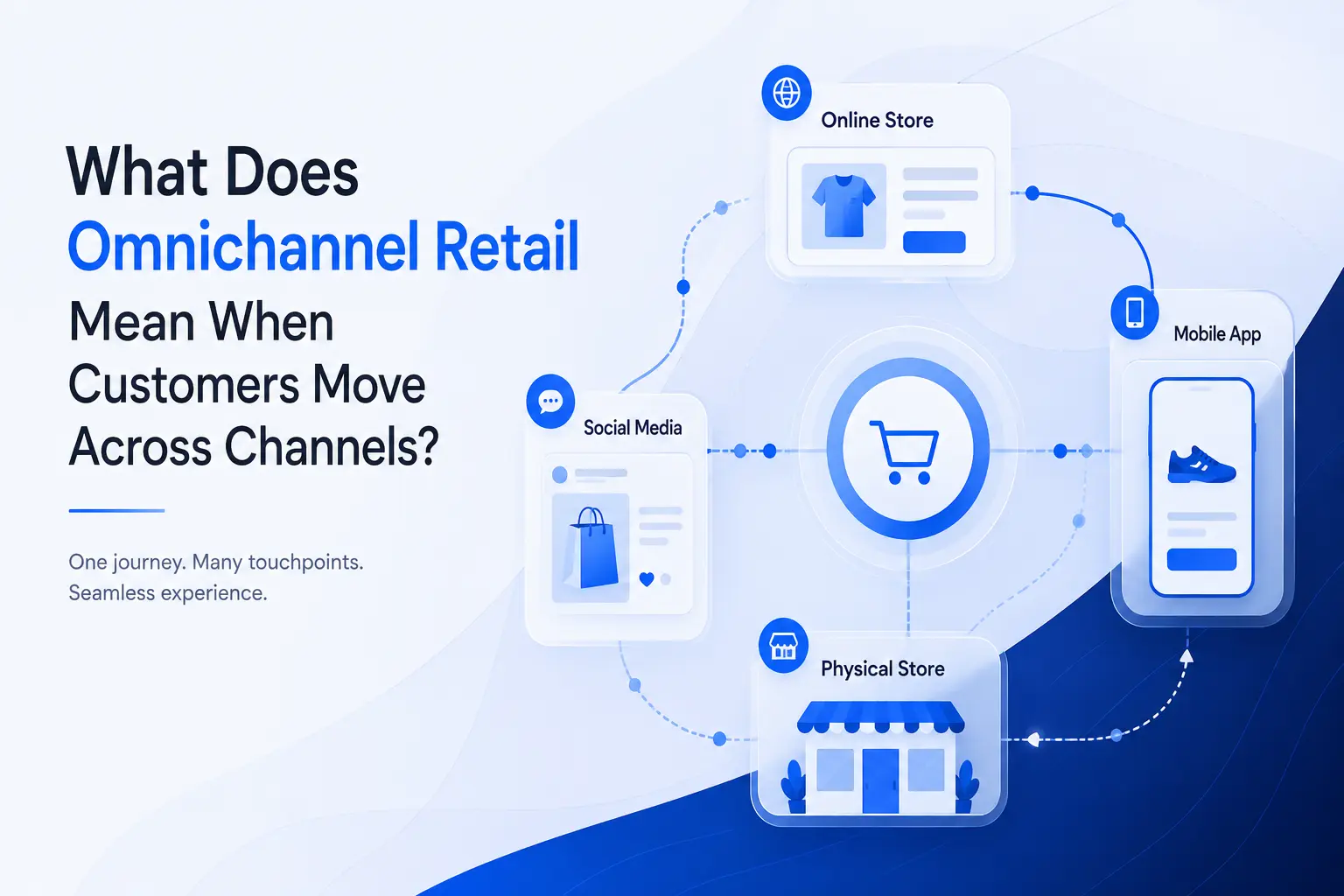
Customers rarely purchase through a single touchpoint anymore. A typical buying journey might look like this:
The customer sees these interactions as one conversation. Most businesses treat them as separate events.
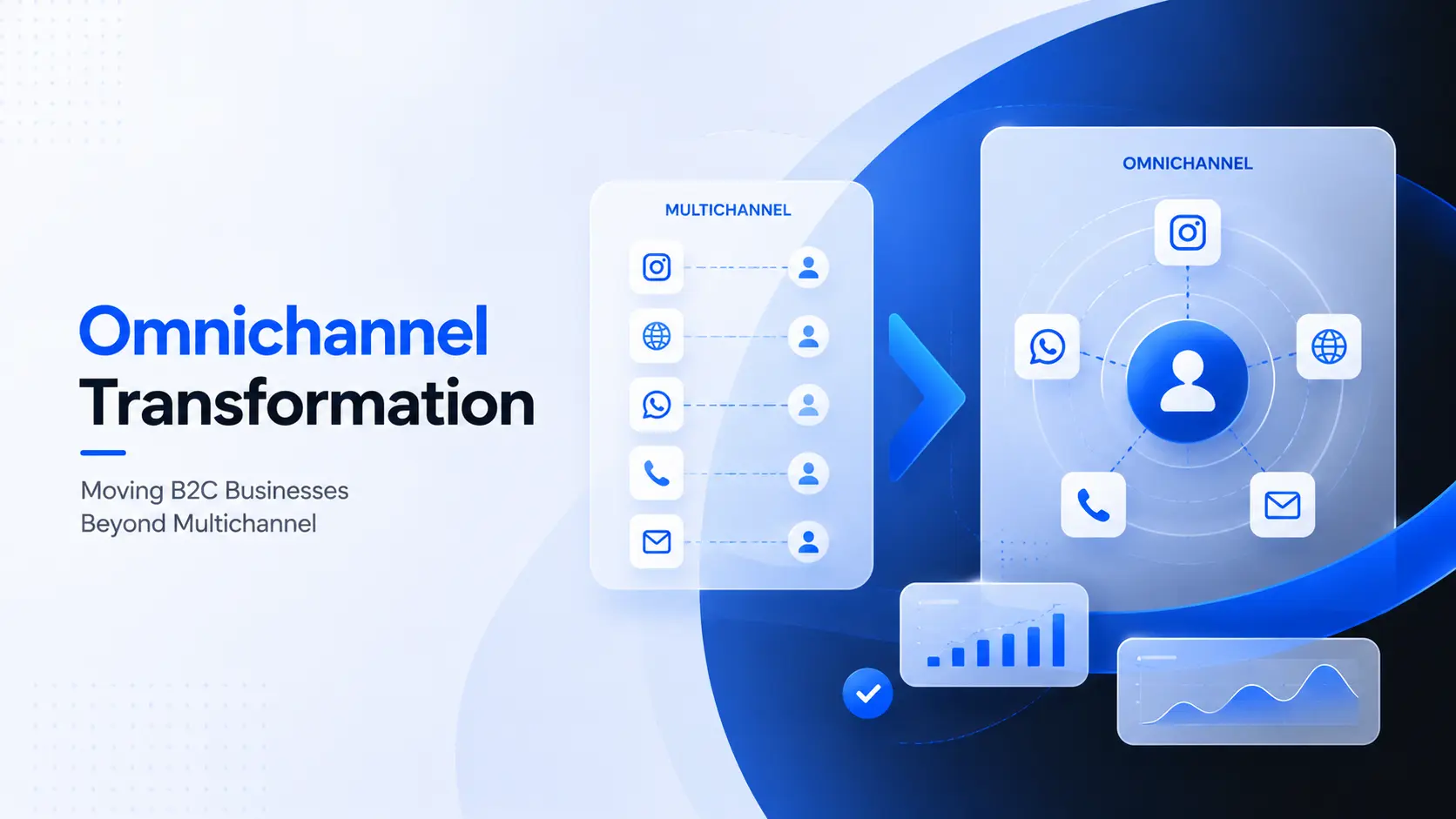
This is where omnichannel retail differs from multichannel retail.
The objective is simple: create one customer journey regardless of how many channels are involved.
Connect customer interactions across online and offline channels.
How AI in Retail Connects Online and Offline Customer Journeys
The biggest challenge is not creating more channels.
The challenge is connecting them.
Modern customers generate thousands of signals:
- Website visits
- Product views
- Cart activity
- WhatsApp conversations
- Store visits
- Purchase history
- Support requests
- Loyalty interactions
Without AI, these signals remain fragmented.
With AI in retail, businesses can unify these interactions and create a complete customer profile in real time.
What AI Actually Does
AI acts as an orchestration layer between customer touchpoints.
Instead of viewing every interaction separately, AI identifies:
- Who the customer is
- What they viewed previously
- Which channel did they use last
- Where they dropped off
- What action is most likely next
For example:
A customer abandons a cart online. AI detects abandonment.
Instead of sending a generic email, it triggers a personalized WhatsApp message.
If the customer later visits a store, the associate can immediately see previous browsing behavior and continue the conversation.
The result is a connected omnichannel customer journey rather than isolated interactions.
Research from KPMG's Intelligent Retail Report shows that 64% of retailers report moderate to high business impact from AI initiatives, while 55% have already achieved moderate to very high ROI from AI investments.
Create seamless customer journeys with Convin.
This blog is just the start.
Unlock the power of Convin’s AI with a live demo.

High-ROI Omnichannel Retail Use Cases for Indian D2C Brands
Many D2C brands understand the importance of omnichannel retail.
The challenge is identifying where to start.
The highest ROI often comes from customer-facing use cases rather than large infrastructure projects.
1. Cart Recovery Across Channels
Instead of relying solely on email reminders, brands use AI to trigger recovery conversations through WhatsApp, SMS, or customer support channels.
This improves visibility and response rates. For D2C brands, where there is no retailer intermediary, every abandoned cart is a direct revenue loss, making cross-channel recovery even more critical.
2. Store Visit Intelligence
When customers visit a physical store, associates can access online browsing history and previous conversations. This reduces friction and improves conversion rates. D2C brands have a unique advantage: they own the entire customer relationship. AI makes that ownership actionable in-store.
3. Personalized Product Recommendations
AI combines purchase history, browsing behavior, and support interactions to recommend products more accurately.
4. Unified Customer Support
Customers often start conversations digitally and continue them elsewhere.
AI helps support teams maintain context across channels. Unlike marketplace sellers, D2C brands control every support interaction. AI ensures that context from owned channels, websites, WhatsApp, apps, travels with the customer.
5. Loyalty and Retention Programs
AI identifies customers at risk of churn and automatically triggers engagement campaigns across preferred channels. D2C brands depend on repeat purchases more than one-time transactions. AI-driven retention across preferred channels directly protects lifetime value.
6. Real-Time Inventory Visibility
D2C customers often check product availability online before visiting a store. AI connects online inventory data with in-store stock, ensuring customers see accurate availability across channels. This reduces wasted store visits and improves purchase confidence before the customer even walks in.
According to KPMG's India CX Report 2025, 59% of customers consider point-of-sale experiences highly influential in shaping overall retail perceptions, highlighting why connecting digital and physical interactions is increasingly important.
Identify your most valuable customer journeys with Convin.
How an Omnichannel AI Agent Handles Digital and In-Store Touchpoints
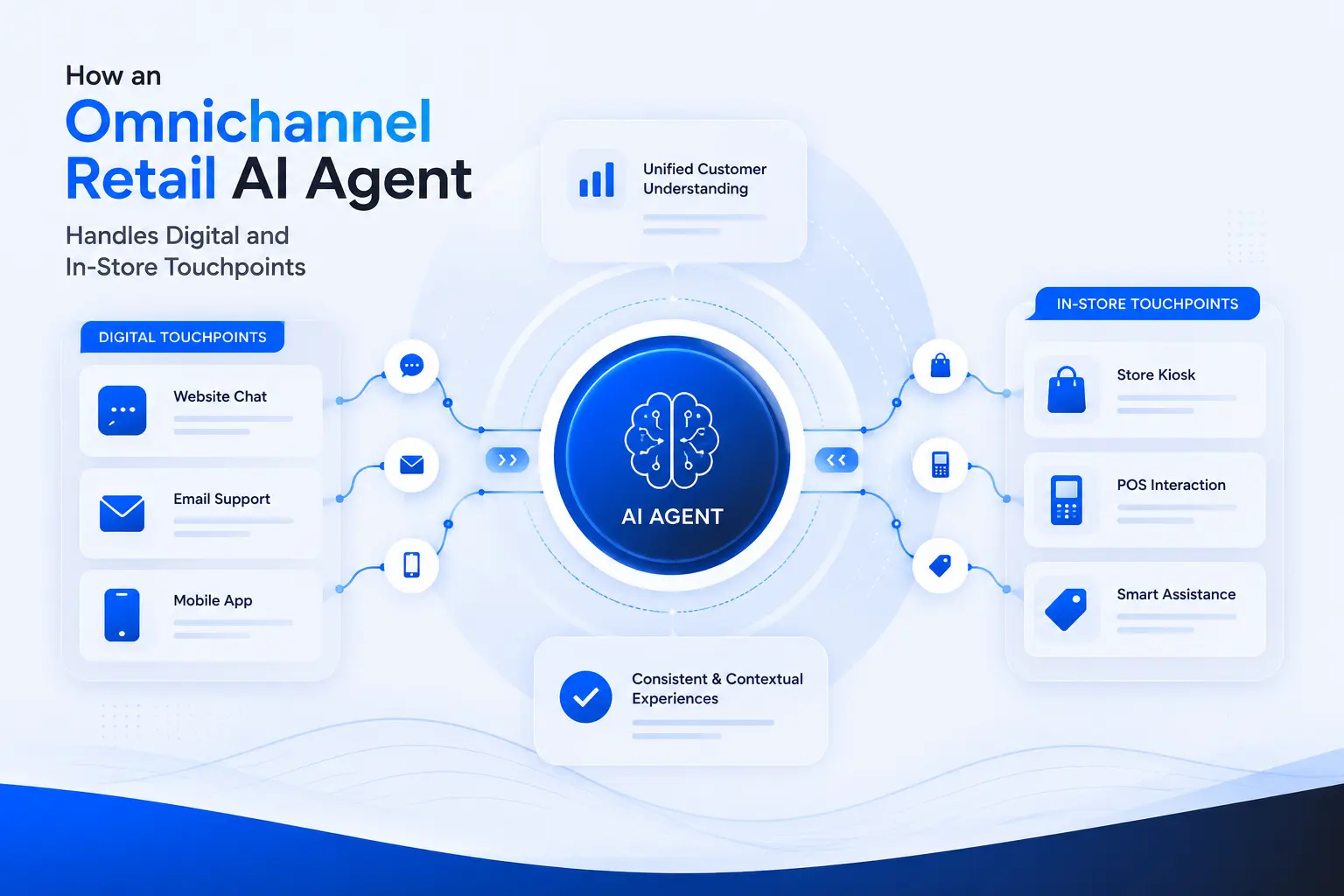
Traditional automation reacts to customer actions. AI agents go further.
They can observe, analyze, and act across multiple channels simultaneously.
Imagine a customer who:
- Browses products online
- Messages the brand on WhatsApp
- Visits a store
- Calls support
- Returns later to complete a purchase
Instead of treating these as separate interactions, an omnichannel AI agent continuously updates the customer's profile.
The AI agent can:
- Recognize the Customer Across Channels
AI connects customer interactions from websites, apps, WhatsApp, stores, and support channels to create a unified customer profile.
- Maintain Conversation Context
Customers can switch between channels without repeating information, making every interaction feel like part of the same conversation.
- Recommend Next Best Actions
Based on customer behavior and intent, AI suggests relevant products, offers, support actions, or engagement opportunities.
- Support Store Associates
Store teams gain access to real-time customer insights, including browsing history, preferences, and previous interactions, enabling more personalized assistance.
- Trigger Personalized Follow-Ups
AI automatically sends relevant messages after store visits, purchases, abandoned carts, or support conversations to keep customers engaged.
Salesforce's 2025 connected shoppers report found that 75% of retailers believe AI agents will be essential for competing successfully in the near future.
Meanwhile, Gartner predicts that by 2028, 70% of customer service journeys will begin and end within conversational AI experiences, reflecting how customer expectations are rapidly evolving.
Build seamless customer journeys with Convin.
Why Omnichannel Retail Is Becoming a Competitive Necessity
The future of retail is not online. The future of retail is not offline. The future is connected.
Customers no longer distinguish between channels. They simply expect brands to remember who they are and what they need. As customer journeys become increasingly complex, the ability to unify data, conversations, and experiences will separate market leaders from everyone else.
Customers today do not experience a brand through channels; they experience it through moments. A pricing question on WhatsApp, a store visit, a follow-up email, a repeat purchase on the app, these are not separate events. They are one relationship. Brands that treat them as such are the ones building loyalty that compounds over time.
Deliver connected retail experiences with Convin.
What This Means For Your D2C Brand
Customers do not think in channels. They expect brands to recognize them and continue the conversation wherever they engage. That is why omnichannel retail has become essential for modern retailers and D2C brands. By connecting customer signals, conversations, and touchpoints, AI helps businesses create seamless experiences at scale. Brands that win will not be the ones with the most channels, but the ones that build the most connected customer journeys. D2C brands that unify their customer data today will be the ones with the retention advantage tomorrow, because the customer who feels remembered always comes back.
Book your demo and build connected customer journeys.
FAQs
1. How can retailers measure the success of an omnichannel strategy?
Success can be measured through metrics such as customer retention, repeat purchases, cross-channel conversion rates, customer satisfaction scores, and lifetime value.
2. Why do customers abandon purchases when moving between channels?
Customers often drop off when they have to repeat information, face inconsistent experiences, or encounter disconnected systems across online and offline touchpoints.
3. What role does customer data play in omnichannel retail?
Customer data helps brands understand preferences, behaviors, and interactions across channels, enabling more personalized and consistent experiences.
4. Can small and mid-sized D2C brands implement omnichannel retail?
Yes. Many D2C brands start with key channels like their website, WhatsApp, and physical stores, then gradually expand their omnichannel capabilities as they grow.
5. How does omnichannel retail improve customer loyalty?
By providing consistent and personalized experiences across channels, brands make it easier for customers to engage, purchase, and return, leading to stronger loyalty over time.


.webp)


.avif)