

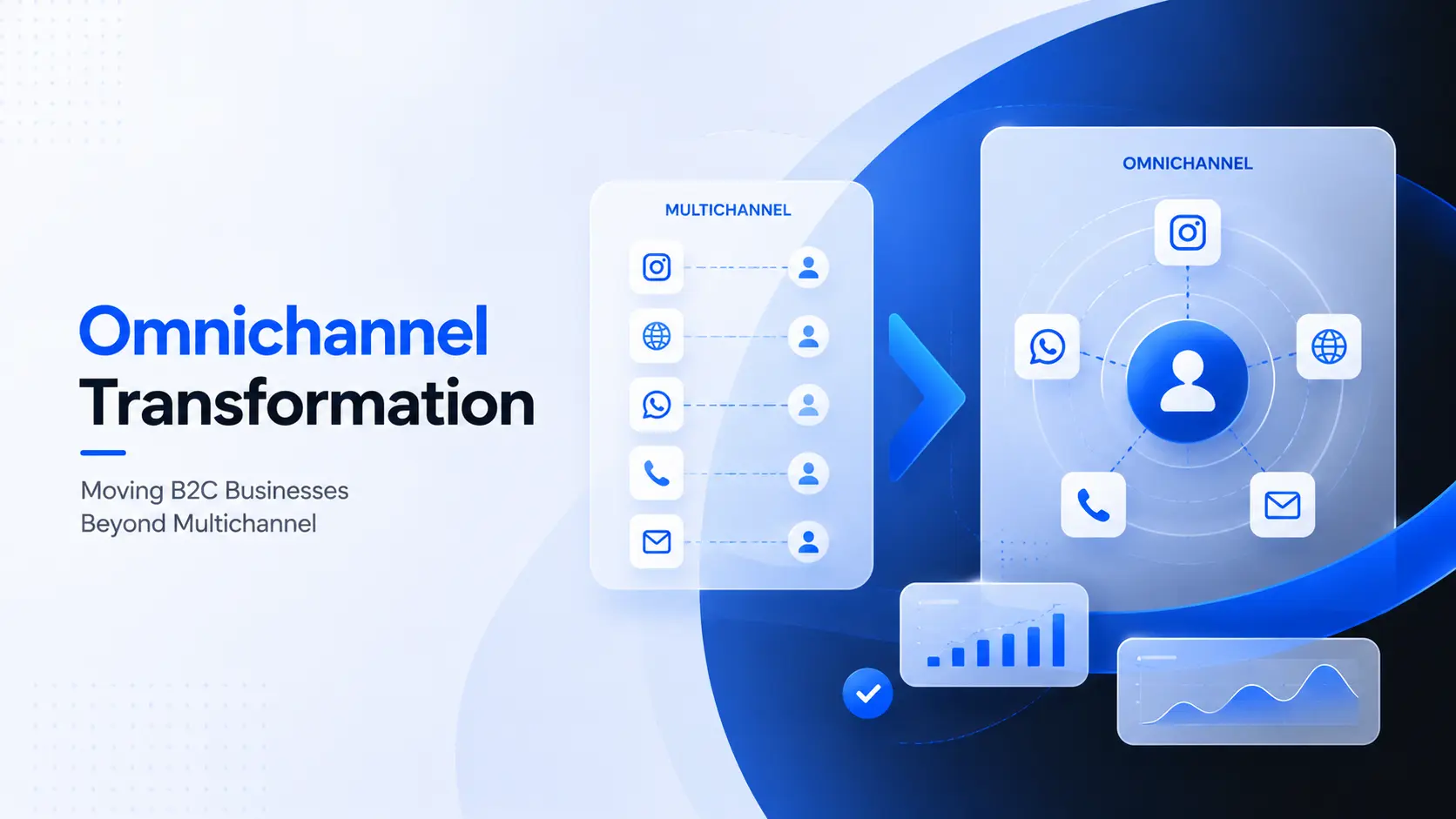
A customer sees your product on Instagram while commuting. Later, they browse your website, add items to their cart, and leave without purchasing. The next day, they received an email promotion that has no connection to the products they viewed. When they eventually contact support through WhatsApp, they have to repeat information they've already shared elsewhere.
From the customer's perspective, this is one journey.
From the business's perspective, it often involves multiple disconnected systems, teams, and channels.
This gap is driving a growing focus on omnichannel transformation across B2C industries. Customers no longer distinguish between digital and physical touchpoints. They expect businesses to recognize their history, preferences, and intent regardless of where interactions occur. As a result, omnichannel transformation has become a strategic priority for organizations looking to improve customer engagement, retention, and operational efficiency. For most brands, the challenge is not adding more channels. It is connecting existing channels, systems, and teams to create a seamless experience. A successful omnichannel transformation enables businesses to move beyond fragmented interactions and deliver consistent customer journeys across every touchpoint.
Drive omnichannel transformation with Convin.
What Is Omnichannel Transformation and Why Are B2C Brands Prioritizing It?
Many organizations assume that omnichannel means being present on multiple communication platforms.
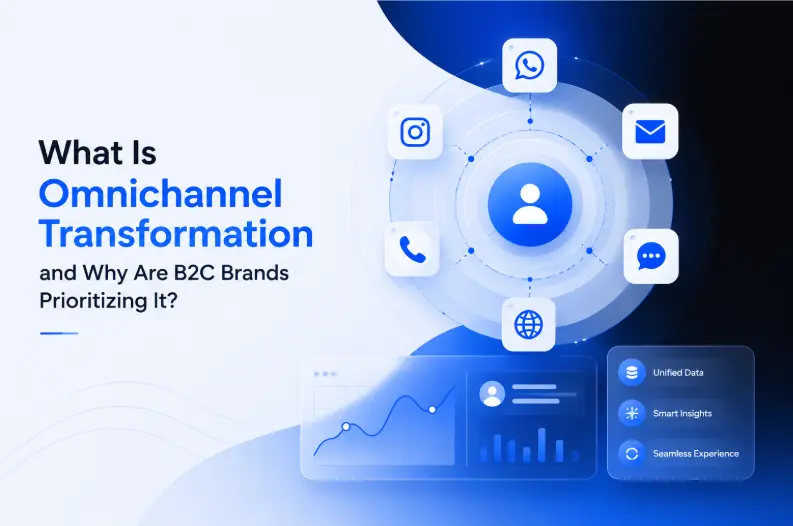
That is only part of the picture. Omnichannel transformation is the process of connecting customer interactions, data, teams, and technologies to create a unified experience across every touchpoint. Instead of managing channels independently, businesses align them around a single customer journey.
The need for omnichannel transformation is being driven by changing customer behavior. Consumers move between websites, mobile apps, social media platforms, messaging channels, physical stores, and contact centers without considering them separate experiences.
Research from McKinsey highlights that customers increasingly expect seamless movement across digital and physical channels during their buying journeys, making integrated experiences a competitive differentiator.
Why Businesses Are Investing in Omnichannel Transformation
Organizations pursuing omnichannel transformation are not simply modernizing technology. They are redesigning how customers interact with the business.
Turn fragmented interactions into connected journeys.
What Does an Omnichannel Transformation Actually Involve for a B2C Business?
A successful omnichannel transformation affects people, processes, technology, and customer data simultaneously.
Many businesses focus only on technology implementation and underestimate the operational changes required.
Core Components of Omnichannel Transformation
1. Customer Data Unification
Customer information often exists across e-commerce platforms, CRMs, support tools, loyalty systems, and marketing applications. Omnichannel transformation begins by creating a unified customer profile.
2. Journey Mapping
Businesses need visibility into how customers move between channels before purchasing, seeking support, or renewing services.
3. Process Alignment
Marketing, sales, customer support, and operations teams must align around customer outcomes rather than channel-specific goals.
4. Technology Integration
Systems need to exchange information in real time to support a seamless omnichannel customer experience.
Multichannel vs Omnichannel
The goal of omnichannel transformation is not to create more touchpoints. The goal is to make every touchpoint work together.
Create a unified customer view with Convin.
This blog is just the start.
Unlock the power of Convin’s AI with a live demo.

Why Moving From Multichannel to Omnichannel Is More Difficult Than It Looks
The transition from multichannel to omnichannel is often more complex than businesses expect.
Most organizations already have established systems, workflows, and reporting structures designed around individual channels. These systems may perform well independently but struggle to share customer information effectively.
A brand can operate email, voice, WhatsApp, social media, web chat, and physical stores successfully while still delivering a fragmented experience.
This is why many omnichannel transformation initiatives stall during implementation. The challenge is not channel availability. The challenge is channel coordination.
When organizations move from multichannel to omnichannel, they must rethink customer ownership, team structures, data governance, and engagement workflows. This often requires significant operational change alongside technology investments.
McKinsey research has consistently found that organizational silos remain one of the biggest barriers to delivering a connected customer experience.
Create truly connected customer experiences with Convin.
The Most Common Barriers to Omnichannel Transformation
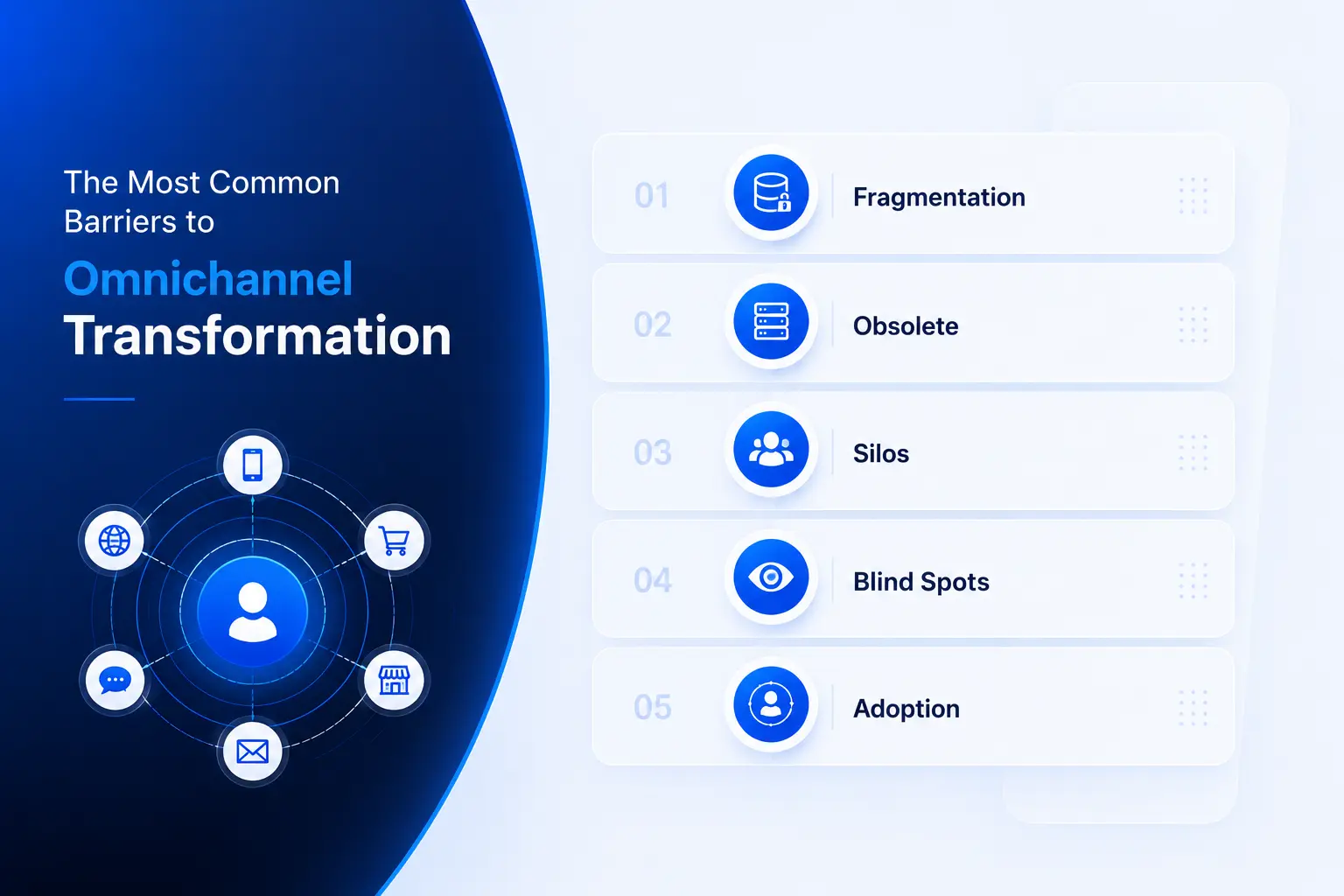
Despite growing investment, many organizations encounter similar obstacles during omnichannel transformation initiatives.
1. Data Silos
Customer information remains fragmented across departments and platforms.
2. Legacy Systems
Older technologies often make integration difficult and expensive.
3. Organizational Silos
Different departments frequently operate with separate objectives and KPIs.
4. Limited Journey Visibility
Many businesses understand channels but lack visibility into complete customer journeys.
5. Change Management Challenges
Employees must adapt to new workflows, technologies, and performance metrics.
Common Transformation Challenges
The success of an omnichannel transformation often depends as much on organizational alignment as technology implementation.
Identify what's slowing your transformation.
Building an Omnichannel Strategy That Supports Long-Term Growth
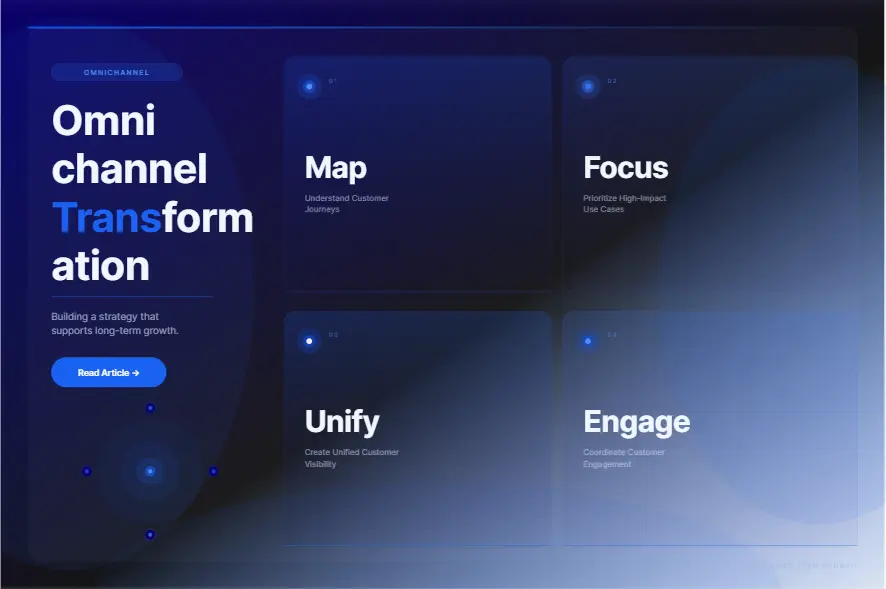
An effective omnichannel strategy begins with customer behavior rather than channel selection.
Many organizations make the mistake of focusing on technology first. Instead, businesses should focus on understanding how customers interact with the brand across the entire lifecycle.
Step 1: Understand Customer Journeys
Identify common paths across awareness, consideration, purchase, support, and retention.
Step 2: Prioritize High-Impact Use Cases
Examples include:
- Cart abandonment
- Lead nurturing
- Customer onboarding
- Order tracking
- Customer support escalation
Step 3: Create Unified Customer Visibility
Establish a single source of customer truth.
Step 4: Coordinate Customer Engagement
Use customer behavior and intent to drive communication timing and channel selection.
A successful omnichannel strategy creates the foundation required for sustainable omnichannel transformation and a stronger omnichannel customer experience.
Build journeys that improve customer outcomes.
How Long Does an Omnichannel Transformation Take and What Does It Cost?
One of the most common questions surrounding omnichannel transformation is how long implementation takes.
The answer depends on organizational complexity, channel maturity, and technology readiness.
Typical Omnichannel Transformation Timeline
The cost of an omnichannel transformation depends on several factors, with technology often representing the largest investment. Businesses typically spend on platforms, integrations, APIs, and the tools needed to connect customer interactions across channels. Data infrastructure is another major expense, particularly when organizations need customer data platforms, data warehouses, or systems that support a unified customer view.
Many companies also invest in consulting and implementation support to accelerate deployment and avoid common pitfalls.
Beyond technology, employee training plays a critical role in ensuring teams can effectively use new systems and processes.
Process redesign is another important cost consideration, as businesses often need to restructure workflows, redefine responsibilities, and align teams around a shared customer journey.
While the overall investment varies based on business size and complexity, successful omnichannel transformation initiatives typically balance technology upgrades with investments in people, processes, and long-term operational change.
The most successful omnichannel transformation programs typically adopt a phased approach rather than attempting large-scale change all at once.
Omnichannel Transformation Roadmap for Mid-Size B2C Brands
A structured roadmap helps organizations prioritize investments and reduce disruption.
Phase 1: Assess Current Capabilities
Document existing channels, systems, and customer journeys.
Phase 2: Build a Unified Customer View
Connect customer data across platforms.
Phase 3: Integrate Priority Channels
Focus on the channels customers use most frequently.
Examples include:
- Website
- Mobile applications
- Voice support
Phase 4: Automate Customer Journeys
Enable behavior-driven engagement and orchestration.
Phase 5: Optimize Continuously
Use customer insights to improve experiences over time.
Sample Omnichannel Transformation Roadmap
A successful omnichannel transformation typically follows a phased roadmap that helps businesses connect customer experiences without disrupting existing operations. Rather than attempting a large-scale overhaul all at once, organizations can build momentum by focusing on specific milestones that create measurable progress over time.
- Assessment: Evaluate existing channels, systems, customer journeys, and internal processes to identify gaps, inefficiencies, and opportunities for improvement.
- Data Unification: Consolidate customer information from multiple platforms to create a single, comprehensive view of each customer and improve visibility across teams.
- Integration: Connect critical customer-facing channels and backend systems so customer context can move seamlessly across touchpoints.
- Automation: Implement journey orchestration and automated workflows that enable timely, personalized engagement based on customer behavior and intent.
- Optimization: Continuously monitor performance, analyze customer interactions, and refine journeys to improve customer experience, operational efficiency, and business outcomes.
Following a structured omnichannel transformation roadmap helps organizations move from disconnected interactions to a fully integrated omnichannel customer experience.
See how leading brands create connected journeys across channels.
How to Measure Omnichannel Transformation Success
Technology implementation alone does not determine whether an omnichannel transformation has succeeded.
Organizations should focus on customer and business outcomes.
Key Metrics to Track
1. Customer Retention: Measures how effectively your omnichannel transformation improves loyalty and encourages customers to continue engaging with your brand over time.
2. Conversion Rate: Evaluates how well connected customer journeys guide prospects toward completing desired actions, such as purchases, sign-ups, or inquiries.
3. Customer Effort Score (CES): Assesses how easy it is for customers to complete tasks, resolve issues, or move between channels without friction.
4. Resolution Time: Tracks how quickly customer concerns are addressed, helping businesses understand whether unified customer context is improving service efficiency.
5. Customer Lifetime Value (CLV): Indicates the long-term revenue generated by customers and helps measure the business impact of delivering a seamless omnichannel customer experience.
6. Repeat Purchase Rate: Shows how frequently customers return to buy again, providing insight into customer satisfaction, engagement, and overall experience quality.
What This Means For You
The shift from multichannel to omnichannel is no longer optional for B2C brands. Customers expect seamless, connected experiences across every touchpoint, regardless of channel.
A successful omnichannel transformation helps businesses unify customer data, align teams, connect systems, and deliver a consistent omnichannel customer experience. While the journey requires strategic planning and operational change, the outcome is clear: stronger customer relationships, higher loyalty, and sustainable business growth. Brands that prioritize omnichannel transformation today will be better positioned to meet evolving customer expectations tomorrow.
Ready to accelerate omnichannel transformation? Book your demo call with Convin.
FAQs
1. How do you know if your business is ready for omnichannel transformation?
If customers interact across multiple channels and teams struggle with fragmented data or inconsistent experiences, it's a strong sign that omnichannel transformation is needed.
2. Does omnichannel transformation require replacing existing technology systems?
No. Most businesses start by integrating existing systems and gradually connecting customer data, channels, and workflows.
3. Which industries benefit the most from omnichannel transformation?
Retail, e-commerce, banking, insurance, healthcare, telecommunications, and travel often see the greatest impact.
4. What role does AI play in omnichannel transformation?
AI helps automate engagement, personalize interactions, and maintain customer context across channels.
5. How can businesses measure customer experience improvements after an omnichannel transformation?
Common metrics include customer satisfaction, retention, conversion rates, customer effort score, and repeat purchases.



.webp)


.avif)